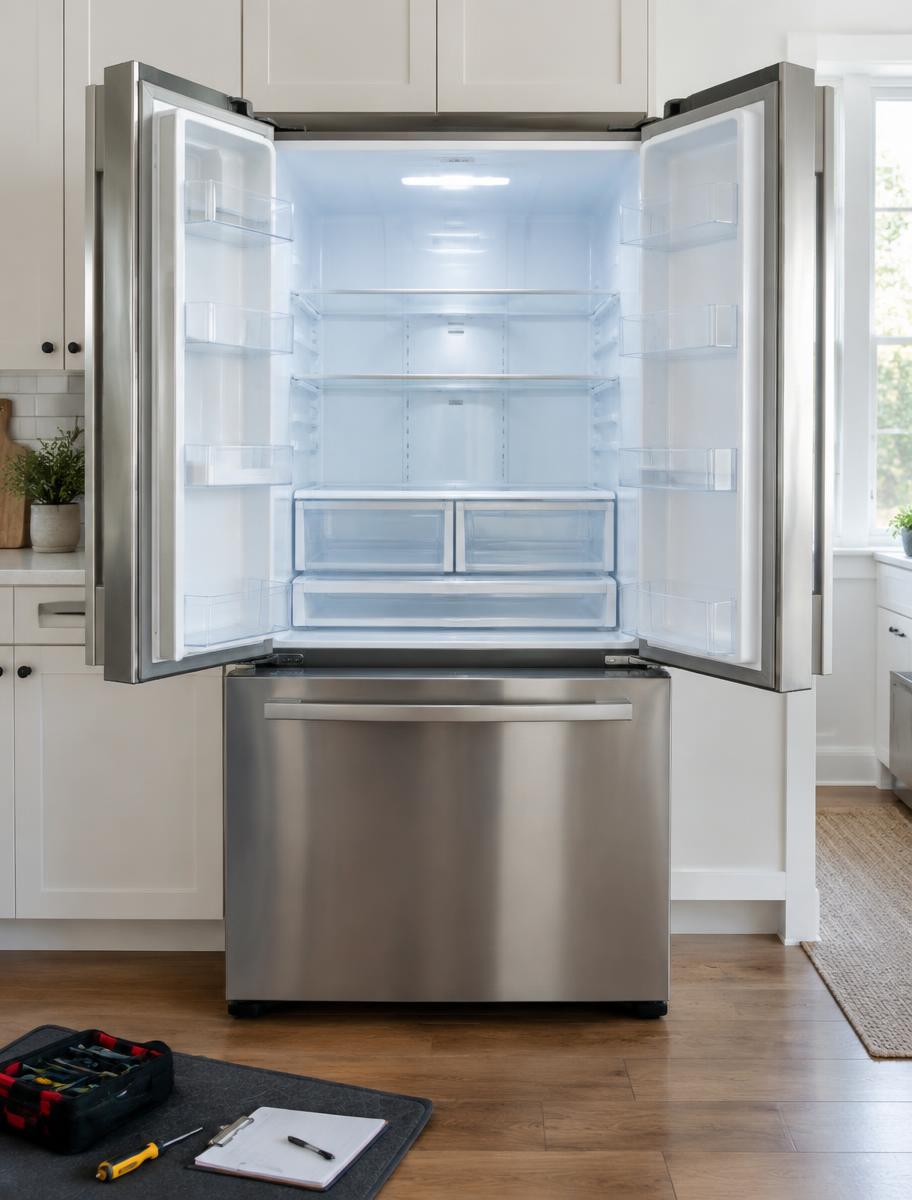
A warm refrigerator is one of the most stressful appliance problems because the clock starts ticking on everything inside it. In a North Florida summer, when kitchens stay warm and the unit runs harder, small problems that were hiding all spring tend to show up at once. This guide walks through what usually causes a refrigerator to stop cooling, the checks you can safely make before anyone comes out, and the signs that point to a repair that needs a technician.
First, protect the food
Before troubleshooting, keep the doors closed as much as possible. A closed refrigerator holds its temperature far longer than one that is opened every few minutes to check on it. If you have an appliance thermometer, place it in a glass of water on a middle shelf; the water reading is a more honest picture of food temperature than the air near the door.
If the freezer is still cold but the fresh-food side is warming, move the most perishable items — dairy, raw meat, leftovers — into a cooler with ice. That buys time while you work out whether the problem is simple or needs refrigerator repair.
The quick checks worth doing yourself
Many cooling complaints come down to something outside the sealed system. These checks take a few minutes and require no tools:
- Confirm the temperature setting was not bumped during cleaning or loading.
- Look for items blocking the air vents inside the fresh-food and freezer compartments.
- Close each door on a strip of paper; if it slides out easily, the gasket may not be sealing.
- Listen at the back or bottom of the unit — silence, clicking, or constant running each tell a different story.
- Make sure the unit has breathing room; refrigerators pushed tight against a wall or cabinet struggle to release heat.
Dirty condenser coils and Florida humidity
The condenser coils release the heat the refrigerator pulls out of your food. When they are coated in dust, pet hair, or lint, the unit has to run longer to do the same job. In Tallahassee homes where the kitchen sits near a laundry area or where pets shed year-round, coils can load up faster than most people expect.
On many models the coils are behind a kick plate at the bottom front; on others they are on the back. Unplug the unit before cleaning, and use a soft brush or vacuum attachment. If cleaning the coils does not bring the temperature back within a day, the cause is probably elsewhere.
When the freezer is cold but the fridge is warm
This split is one of the most common patterns we hear about. In most modern refrigerators, cold air is made in the freezer section and pushed into the fresh-food side by a fan through a small damper or duct. If that path is blocked by frost, or the fan is not running, the freezer can stay cold while the refrigerator warms up.
Heavy frost on the back wall of the freezer often points to a defrost system problem — a failed heater, sensor, or control. Unplugging the unit for a day can temporarily melt the ice and restore cooling, but if the underlying defrost issue is not fixed, the frost comes back. That repeating cycle is a strong sign it is time to schedule a diagnosis.
Signs that point to a technician
Some symptoms are not safe or practical to handle at home. Call for service if you notice any of these:
- The compressor clicks on and off repeatedly without running.
- The unit runs constantly but neither compartment gets cold.
- You see an oily residue near the tubing at the back or bottom.
- The refrigerator trips a breaker or smells like burning.
- Water is pooling under the unit along with the cooling problem.
Repair or replace?
The honest answer depends on the age of the refrigerator, the part involved, and how the unit has performed overall. A fan motor, thermistor, or defrost component is usually a very different decision than a sealed-system issue. A good diagnosis should leave you with a clear explanation of what failed and what your options are, so you can decide with the facts in front of you.
If your refrigerator is also leaking, read our guide to why refrigerators leak water. And if you are unsure whether we cover your neighborhood, see the full Tallahassee service area.
Still not working?
Call (850) 755-9600 or send the brand, model, and what the appliance is doing.