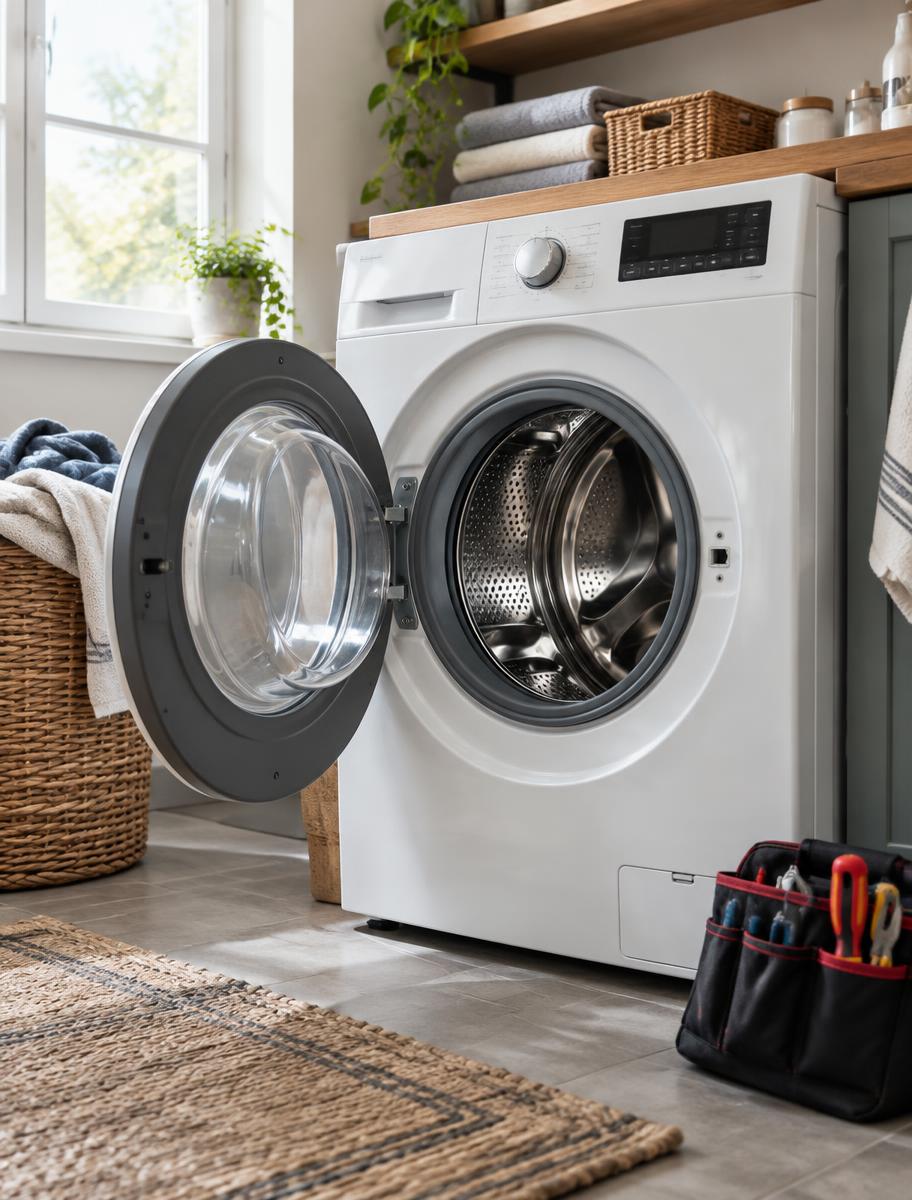
Opening the washer to find a drum full of water and soaking clothes is frustrating. Draining and spinning problems usually trace back to the drain path, the safety systems that allow the spin cycle, or the parts that move the drum. Here is how to narrow it down.
Start with the load itself
An unbalanced load — a single heavy blanket, a bathmat, or a pile of towels bunched on one side — can stop a washer from reaching spin speed. Modern machines detect imbalance and refuse to spin to protect themselves. Redistribute the load and run a drain-and-spin cycle before assuming a part has failed.
Check the drain pump filter
Many front-loaders have a small access door near the bottom front that opens to a drain pump filter. Coins, hair ties, socks, and lint collect there and can stop water from leaving the drum. Place towels and a shallow pan down first — there will be water. Top-loaders usually have their pump inside the cabinet, which is less friendly for do-it-yourself access.
- Unplug the washer before opening any access panel.
- Drain the residual water slowly through the small hose if one is provided.
- Clean the filter and check that the pump impeller turns freely.
Inspect the drain hose
Pull the washer forward carefully and look at the drain hose. A kink from pushing the machine back against the wall is a common culprit. Hoses can also clog where they enter the standpipe. If water drains slowly from the standpipe itself, the problem may be household plumbing rather than the washer.
Lid switches and door locks
Washers will not spin unless they sense the lid is closed or the door is locked. A failed lid switch or door lock assembly can make a machine fill and agitate normally but stop before draining and spinning. Error codes on the display often point directly to this — note any code before calling, as it speeds up diagnosis.
Belts, motors, and control boards
If the pump runs but the drum will not turn, or you hear humming without movement, the issue may involve a drive belt, motor coupling, or motor control. These repairs require disassembly and testing, and they are good candidates for professional washing machine repair.
Since washers and dryers work as a pair, a washer that leaves clothes too wet also makes the dryer work harder. If drying times suddenly jump, read our guide on dryers that run but don't heat.
Getting it fixed
When you request service, include the brand, whether it is a top- or front-loader, and any error codes. That helps the visit start with the right questions.
Still not working?
Call (850) 755-9600 or send the brand, model, and what the appliance is doing.